
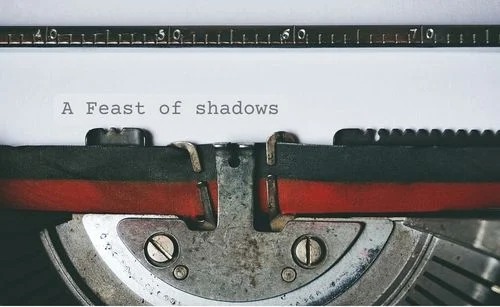
Have you ever felt like a ghost in your own life? That’s exactly where we find Julian Duval at the start of my new book, A Feast of Shadows. Set against the clinking glasses and smoky jazz clubs of 1920s Paris, the story isn’t just about the “Lost Generation,” but about the parts of ourselves we lose when we stop creating.
When I first started drafting this manuscript, I wanted to capture that delicate, often dangerous dance between artistic ambition and the destructive pull of addiction. Writing this wasn’t just a creative exercise; it was a deep dive into what it means to reclaim your voice when the world and your own brain, which is often a much harsher critic, tells you it’s been silenced.
Julian, my protagonist, is a man drowning his potential in whiskey, haunted by one scathing review that stopped his pen three years prior.
We’ve all been there, haven’t we? That moment where one piece of criticism feels like a total death sentence to your dreams.
In the bustling heart of the city, Julian is a phantom among vibrant artists, leaning over his champagne and watching his hopes vanish like bubbles. But, as I’ve learned in my own writing journey, light persists even in the deepest shadows.
For Julian, that light comes in the form of Clara, a spirited painter who refuses to let him vanish. Their connection is the heartbeat of the book, a reminder that we don’t have to face our storms alone. I think we all need a Clara in our lives, basically someone to remind us that the darkness doesn’t have to win.
I didn’t write this book in full light either. Let me tell you, I was a less “glamorous author” and more “man desperately seeking caffeine” author. To get into the headspace of 1920s Paris, I often wrote in local cafés, surrounding myself with the scent of espresso and the low hum of conversation, much like the characters in Le Jardin de Café.
Developing a daily writing habit was one of my biggest triumphs, and it’s what allowed me to finally finish this story after years of it sitting as a dusty, half-written manuscript in a drawer. It’s a bit of a numbers game, too; did you know that for every famous writer like Hemingway in 1920s Paris, there were hundreds of “Julian Duvals” whose stories were never told?. I also spent way too many hours researching over 50 real-life Parisian haunts to ensure the atmosphere felt authentic because if I’m going to write about absinthe, I want the vibes to be historically accurate.
Coming back to my story! Why should you have my book on your shelf and in your reading list?
Well, first of all, whether you’re a reader who loves literary fiction or an aspiring writer struggling with your own “shadows,” I hope Julian’s journey offers a flicker of defiance against your own doubts.
Look, I’m not going to tell you that this book will solve your life problems or teach you how to bake a perfect baguette. But if you’ve ever felt like you’re drifting through your own life like a “serpent of silver” in the Seine, rich with possibility but currently just cold and wet, then this book is for you.
It’s a story for the people who aren’t the “Hemingways” of the world yet, the ones who are still figuring out which end of the pen to use while trying not to let the shadows win. It’s messy, it’s a bit dramatic (it is 1920s Paris, after all), and it’s a reminder that even if you’re currently a “phantom,” you can still make a hell of a lot of noise.
Ready to join the club of beautifully unfinished people? Swing by the homepage or social media to see what else I’m working on, or grab a copy of my book today if you’re stuck in your own shadows.

